How Much Does It Cost to Patch a Tire?

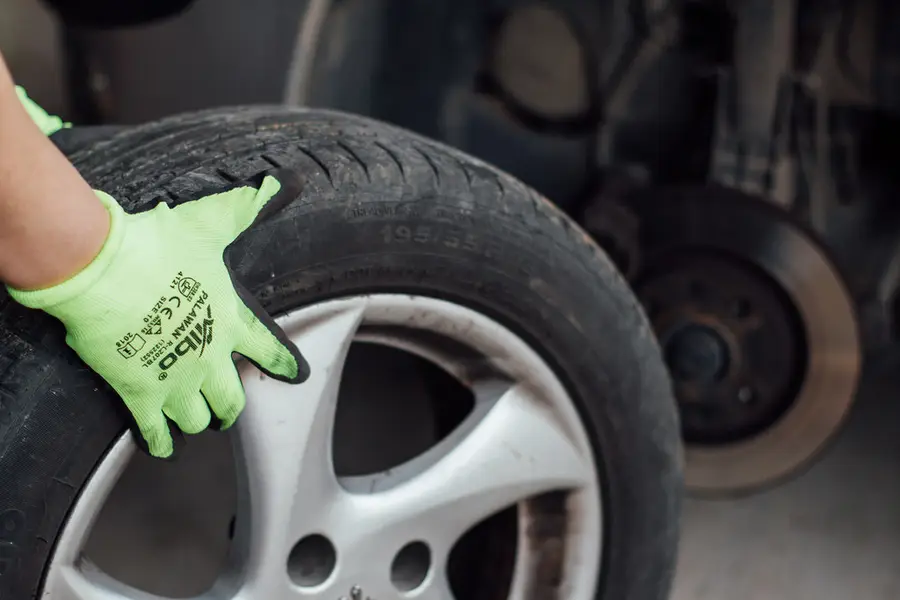
A tire patch costs about $25 to $75 at most shops, and a plug on its own costs about $10 to $20. The patch costs more because the tire has to come off the wheel and be sealed from the inside.
We've fixed flats in Deerfield Beach since 2015, and our 583 Google reviews (4.6 stars) keep coming back to one thing: a fast, honest plug. This is the price deep-dive from our guide to a nail in your tire, so if you're still deciding whether you can drive on it, start there.
We read repair bills all day, and we know most people read them the way they read a horror novel, through their fingers. Slowly, with the lights on, already suspicious of page two. Here's every line that can land on a tire repair bill, and which ones are worth paying.
On this page
Tire repair prices at a glance
Here's what each fix usually costs nationally. Prices are for a regular car or SUV tire.
| Fix | Typical price | Time at our shop |
|---|---|---|
| Plug only | $10 to $20 | About 20 minutes |
| Patch, sealed from inside | $25 to $75 | About 1 hour |
| Run-flat or low-profile repair | $40 to $75 | Depends on the tire |
| DIY plug kit | $10 to $25 | Varies |
| New tire | $150 to $400 or more | Usually next day |
Look at the gap between the patch and the new tire. That's the gap between a nice lunch and a car payment, and it's why the most important question at any tire counter is "can this be fixed?" Ask it early, ideally before anyone clears their throat and says "so, unfortunately."
How much does it cost to plug a tire?
A tire plug usually costs $10 to $20 at a shop. A plug is a sticky rubber strip pushed into the hole from outside the tire, so the tire often stays on the wheel. That's why it's the cheapest repair your car will ever get, narrowly beating the classic fix of turning the radio up so you can't hear the new noise.
It's also why AAA calls a plug on its own a temporary, emergency fix. Nobody looks inside the tire, and the inside is where the damage you can't see likes to hide. How long one holds up is its own question, answered in how long a tire plug lasts.
...They looked at the tire and told me all I needed was a plug. Had me in and out in 20 minutes. (Google review, June 2025)
Why does a patch cost more than a plug?
A patch costs more because it's more work, not more rubber. The US Tire Manufacturers Association says the tire must come off the wheel and be inspected inside before it's repaired. Then the hole is sealed with a patch glued to the inner lining, and everything goes back together.
Kevin Rohlwing of the Tire Industry Association summed the job up as "drill it, fill it, patch it, bill it" (the last step is the one everybody remembers). Every step before the bill is labor, and labor is most of the price.
One driver on the Car Talk forums paid $27.99 for a repair and pointed out the materials came to about $4. He's right about the $4. The other $24 paid someone to take a wheel off a car, which anyone who's tried it on the shoulder of I-95 in August will tell you is a bargain.
If you'd rather skip the forum research, walk in for tire repair in Deerfield Beach and we'll tell you which fix your tire needs before we start.
What else shows up on a nail in tire repair bill?
The repair itself is usually the smallest line. What grows a nail in tire repair price is the extras: balancing, tire pressure sensor parts, and cleaning out sealant if you used a can of it at the roadside.
| Extra | Typical price | When you need it |
|---|---|---|
| Wheel balancing | $10 to $20 | Often after a patch, because the tire came off the wheel. Included in our patch |
| Tire pressure sensor service kit | $5 to $15 | When the sensor's seals are replaced during the repair |
| Tire pressure sensor | $50 to $150 | Only if the sensor is broken or its battery is dead |
| Sensor relearn | $49 to $71 | Some cars need the sensors re-taught after tire work |
| Sealant cleanup | $10 to $30 | If you used a can of tire sealant first |
My banker brain reads this list like a loan contract. Most of these are real work, not tricks, but every one should be named and priced before the job starts. Nobody wants to discover a fee at the register, the way you discover a parking ticket tucked under the wiper.
So ask for the total first. One Car Talk poster was charged for tire pressure sensors on a 1989 Caprice, a car with no tire pressure sensors at all. The car was older than the fee.
Is free flat repair really free?
Sometimes, yes. Several national chains fix qualifying flats for free, and at least one does it with no strings, as long as the hole qualifies (Motor1 explains how these policies work). Most free deals come with one of these conditions:
Free is our favorite price too. It's the only one nobody has ever asked us to explain. If you qualify for a free repair, take it, and we mean that.
Every free repair follows the same safety rules, though. If the nail is in the wrong spot, "free" turns into "you need a new tire", and that part is never free.
When is a tire not worth patching?
A tire can't be safely repaired if the hole is bigger than 1/4 inch, it's in the sidewall or shoulder, it overlaps an old repair, or the tread is worn to 2/32 inch. Those are the Tire Industry Association's rules, and Michelin says a tire that was driven flat should be replaced too.
When that happens, the price question changes. Consumer Reports members paid about $212 for their last tire, so one nail in the shoulder costs about the same as a stack of our plugs. We've done that math twice, and it doesn't improve the second time.
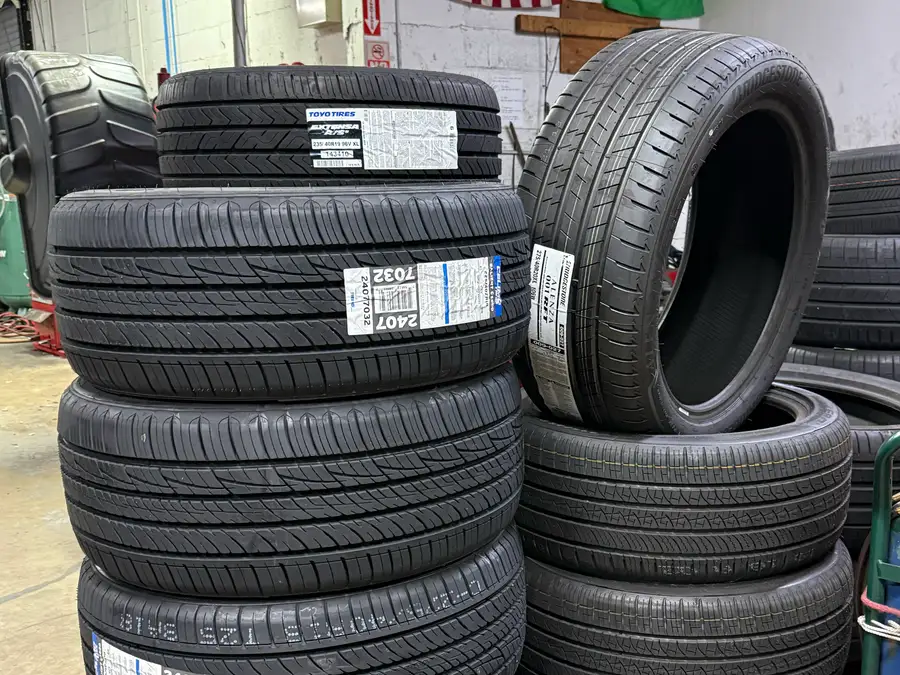
"Can't be fixed" is worth a second look, though. One Kia owner was quoted about $40 to patch a pinhole, then told the tire needed replacing at $297. If you hear it, ask why and ask to see the spot. A nail near the edge is the classic case, covered in nail in tire sidewall.
If it does come to a new tire, we'll show you where the damage is and get you a new tire, usually by the next day.
What a tire repair looks like at our counter
I stopped in with a screw in the middle of the tread of my tire. They plugged it and within 10 minutes I was on my way again. Excellent service! (Google review, January 2020)
A patch takes about an hour. That's long enough for a coffee, two weather checks and a far too careful read of the candle labels at the counter. Yes, a tire shop that sells candles. Customers keep saying the waiting room smells good, and we've stopped pretending that isn't a selling point.
Tire patch cost questions
Is it cheaper to plug or patch a tire?
A plug is cheaper, usually $10 to $20, against $25 to $75 for a patch. At our shop, rebalancing is included with a patch. The patch costs more because the tire has to come off the wheel.
How much does it cost to fix a nail in a tire?
Usually $10 to $75, depending on whether it gets a plug or a patch and which extras your car needs.
How long does it take to patch a tire?
About an hour at our shop, because the tire comes off the wheel and gets sealed from the inside. A plug takes about 20 minutes.
Can I plug a tire myself?
Yes. Plug kits cost about $10 to $25. AAA calls a plug a temporary, emergency fix, so have a shop check the tire afterwards.
When is a tire not worth patching?
When the hole is bigger than 1/4 inch, it's in the sidewall or shoulder, it overlaps an old repair, or the tread is worn to 2/32 inch. Then the tire needs replacing.
Got a nail in your tire right now?
Walk in Monday to Saturday and we'll tell you whether it needs a plug, a patch or a new tire before any work starts. See our tire repair service, or go back to the full guide on what to do about a nail in your tire.

Gerard Galler has co-owned The Tire Place USA in Deerfield Beach since April 2025. He trained as a mechanical and electrical engineer at the University of Liège and started out designing turbines and gas compressors, then spent more than 40 years in international banking. He grew up in São Paulo and speaks Portuguese, French, English and Spanish.