How Long Does a Tire Plug Last?

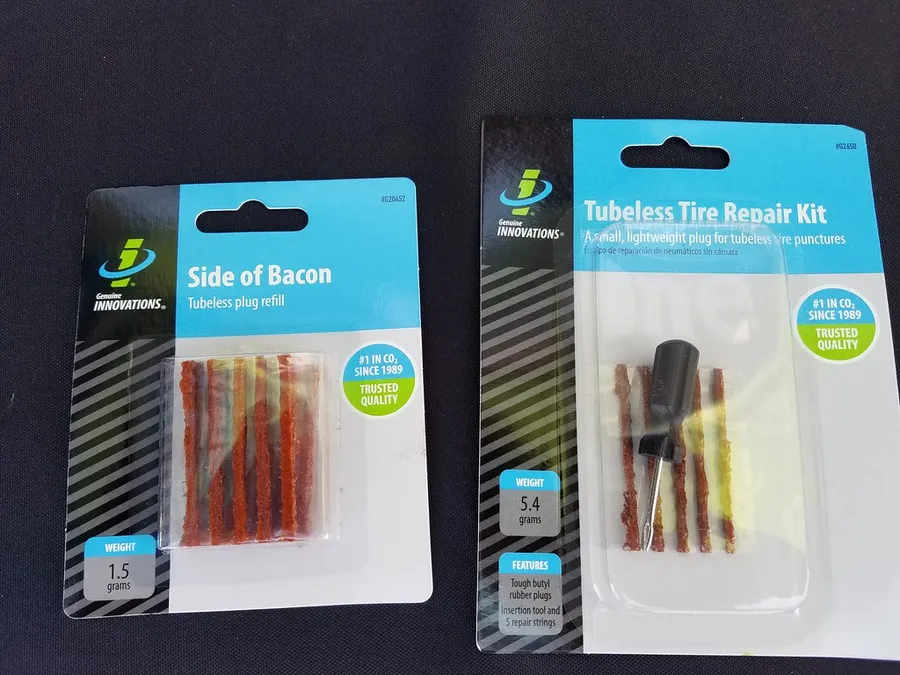
A tire plug has no guaranteed lifespan. Some hold for the rest of the tire's life, others start leaking within weeks, and AAA calls a plug on its own a temporary, emergency fix. A proper repair, with the tire taken off the wheel and sealed from the inside, is meant to last the rest of the tire's life.
We've plugged and patched tires in Deerfield Beach since 2015. This post goes deep on one question from our guide to a nail in your tire: once it's fixed, how long will the fix hold?
We've plugged a lot of tires, so when a website says a plug lasts 25,000 miles, our first question is "says who?" Short version: nobody tested it. Here's what is actually known, and what to do with your plugged tire.
On this page
How long does a tire plug last?
Nobody can give you a number, and the honest sources don't try. AAA says "the lifespan of a tire plug is never certain" and that some "may hold for thousands of miles, while others can fail suddenly and without warning." It's the only car repair that comes with the same guarantee as a weather forecast.
| Source | A plug on its own | Tire off the wheel, sealed inside |
|---|---|---|
| AAA | "A temporary, emergency fix" | "Permanent", meant to last the tire's whole life |
| US Tire Manufacturers Association | "An unacceptable repair" | The standard repair, after the tire is inspected inside |
| Tire Industry Association | String plugs "must be considered temporary" | Plug and patch together, never one alone |
| Michelin | Plugging a tire still on the wheel is "improper" | A combined plug and inside patch only |
Notice what's missing from that table: a mileage number. Four of the biggest names in tires, and not one will put a figure on a plug. When engineers won't give you a number, that is the number.
Where does the "25,000 miles" number come from?
Mostly from other blogs. One top-ranking article credits it to J.D. Power, another credits a tire outlet, and we couldn't find a test behind either.
A number with no test behind it isn't a spec. It's a rumor wearing a lab coat.
The closest thing to a real test comes from Project Farm, a YouTube channel that tests tools. It put 100 plugs from four brands into one tire and drove it 15 miles, some of it sideways on gravel (write-up here). Most held and one brand leaked. Fifteen miles is a great test of a plug, and a less great test of your summer drive to Orlando.
Drivers' own stories split both ways. On the TacomaWorld forum, one owner says "the plugs last until I have worn out the tires."
On a motorcycle forum, a rider's plug held for about 2,500 miles, then lost 10 pounds of pressure overnight. In July. (Of course it was July.)
Why does a tire plug fail?
A plug usually fails in one of three ways:
The Tire Industry Association warns that a bad seal lets water start "corroding the steel belts." One veteran on a truck forum put it more bluntly: the belts "can saw through the plug."
The bigger risk is the damage nobody sees. A plug goes in from the outside, and nobody checks the inside. When a leak hides, we find it the old way: the wheel goes in a tub of water. The US Tire Manufacturers Association says a tire "must be removed from the rim/wheel assembly and inspected" before a proper repair.
Skipping that is like fixing a toothache by chewing on the other side. It works great, right up until it doesn't.
Angle matters too. AAA's Auto Club Group says a nail that went in at more than 45 degrees means a new tire, not a repair. Nails, sadly, don't aim.
How long does a tire patch last?
A proper patch is meant to last the rest of the tire's life. AAA says a patch's bond "is permanent and meant to last the entire lifecycle of the tire", as long as it's done with the tire off the wheel. The industry standard is a combination repair: a rubber stem fills the hole and a patch seals it from the inside.
Plug vs patch, side by side
We admire the plug. It's simple, cheap and it works. On I-95 at 70 mph, though, we'd all rather ride on the one that was inspected from the inside, thanks.
Not sure which one your tire got? Bring it in for tire repair in Deerfield Beach and we'll take a look. What each fix costs is in what it costs to patch a tire.
Is plugging a tire safe?
A plug is safe enough to get you to a shop if the hole is small and in the tread. AAA says to drive a plugged tire "with extreme caution, staying under 50 mph" until it's properly repaired. A plug in the sidewall or shoulder isn't safe at any speed, which is why a nail in the tire sidewall usually means a new tire.
There's a catch most drivers never hear about. Goodyear's service bulletin says an improper repair leaves the tire "no longer being speed-rated by Goodyear", and tires rated H or higher get one repair at most. Your speed rating is printed on the sidewall, in letters so small they seem embarrassed about it.
Plugging a tire on the rim is inexpensive and quick, but it can have serious consequences. (Kevin Rohlwing, Tire Industry Association, in Tire Review)
Do tire plugs fail faster in Florida heat?
Nobody has published a test on that, so treat this part as practitioner belief, not proven fact. What is measured: tire pressure rises about 1 PSI for every 10 degrees, according to AAA. And Scientific American reports that pavement can hit 170 degrees on a 95-degree day.
| Temperature rise | Tire pressure change | When it happens |
|---|---|---|
| 10 degrees | About +1 PSI | Air-conditioned garage to a warm street |
| 20 degrees | About +2 PSI | A 75-degree morning to a 95-degree afternoon |
| 30 degrees | About +3 PSI | Overnight low to a parked car in full sun |
Kevin Rohlwing called "the constant heating, cooling and flexing" the biggest challenge for any tire repair (Tire Review). South Florida runs that cycle most of the year, with a free 3pm thunderstorm for the cooling part.
So check a plugged tire's pressure every week or two. If it keeps dropping, the plug is trying to tell you something, and it's not "great job."
What we see at the counter
Had a slow leak in my tire and thought I needed a new tire, but after going to The Tire Place, they made me feel very comfortable and had great customer service. My tire only needed a plug. (Google review, March 2018)
Plugs have got better, and some last the tire's whole life. As the tread wears down, a plug can leak again. That's why we still call it temporary.
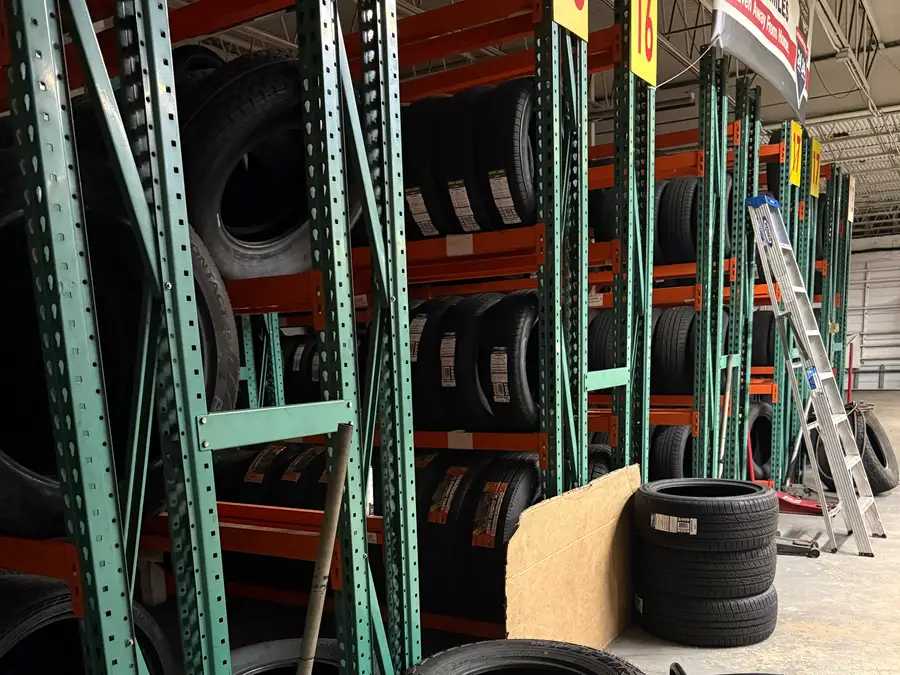
We keep a wall of tires for the days a plug isn't the answer. We'd still rather sell you the quick fix, which is a strange business model for a tire shop, and we've made our peace with it.
Tire plug and patch questions
How long does a tire plug last?
There's no set lifespan. Some plugs last the life of the tire and others leak within weeks. AAA calls a plug on its own a temporary, emergency fix.
How long does a tire patch last?
A proper patch, done with the tire off the wheel, is meant to last the rest of the tire's life, according to AAA.
Is it better to plug or patch a tire?
A patch is the longer-lasting repair because the tire is inspected and sealed from the inside. A plug is faster and cheaper.
Is plugging a tire safe?
It's safe enough to drive carefully to a shop if the hole is small and in the tread. AAA advises staying under 50 mph on a plugged tire until it's properly repaired.
Can a plugged tire be patched later?
Usually. We can patch a tire that was plugged before, as long as the hole is near the center of the tread, and we check it first. It doesn't work the other way: a plug can't go on top of a patch.
How many times can a tire be repaired?
It depends on the tire maker. Goodyear allows one repair at most on tires rated H or higher, and repairs can never overlap.
Plugged tire still losing air?
Walk in Monday to Saturday and we'll tell you whether it can be patched or needs a new tire, before any work starts. See our tire repair service, or go back to the full guide on what to do about a nail in your tire.

Gerard Galler has co-owned The Tire Place USA in Deerfield Beach since April 2025. He trained as a mechanical and electrical engineer at the University of Liège and started out designing turbines and gas compressors, then spent more than 40 years in international banking. He grew up in São Paulo and speaks Portuguese, French, English and Spanish.